Neil wrote:
J'aimerais bien savoir tout les histoires et origine de tout les avions, il dois avoir des bonnes.
Neil
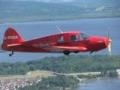
Le Bellanca Pacemaker a été originalement développé pour les records de distance. Il y avait, à l'époque, beaucoup de prix très lucratif$ à gagner...

Cet avion a failli servir à Lindbergh pour sa traversée, mais il y a eu un désaccord... En voici un résumé:
In late 1926, an enterprising Charles Lindbergh had convinced Earl Thompson, and Major Albert Bond Lambert to back him on an attempt to win the $25,000 Orteig Prize for a non-stop transatlantic flight. He specifically wanted a single pilot, and a single engine to reduce weight and chances of failure. The ideal plane was the Wright-Bellanca WB-2. Lindbergh set out by train to New York in a new suit to look professional for a face-to-face meeting with Columbia Aircraft to buy the only WB-2. In the meeting, Levine said the aircraft was worth $25,000, but would discount it to $15,000 due to the free publicity that would be made from the flight, well above Lindbergh's $2000 budget. Lindbergh returned to St. Louis, and had a check signed to him personally for $15,000 and a request to name the WB-2 "The Spirit of St. Louis". Lindbergh said he would have the plane back in St. Louis in a week.
The second meeting in New York was attended by Levine, Bellanca, and Chamberlin. With check in hand, Levine added a stipulation that Columbia Aircraft would select the crew on the flight, which Lindbergh objected to. Reminding Lindbergh that the WB-2 was the only plane that could make the flight at the time, they made him leave and call back the next day to reconsider. The terms did not change, and Lindbergh returned to St. Louis without an airplane.[5] Lindbergh then approached Travel Air Manufacturing Company, asking for a Travel Air 5000 modified with a Wright Whirlwind motor and was declined.[6] Lindbergh also inquired what it would cost to buy a Fokker for the attempt, he was given a quote of $100,000 for a custom trimotor, and was told that Fokker would not build a single engine craft for a transatlantic flight.[7] Lindbergh instead purchased a single place aircraft from Ryan aircraft, the Spirit of St. Louis for $6000.
Lindbergh a choisi le Ryan et le reste "is history"...
L'appareil a par la suite connu des heures de gloire avec le célebre pilote canadien Wop May. Aux commandes de CF-AKI, il a notamment aidé la GRC à traquer le fameux trappeur fou de la région de Rat River au Yukon. Un film en a été fait en 1981, mettant en vedette Charles Bronson et Lee Marvin, intitulé "Death Hunt".
Dans la "vraie vie", Wop May a utilisé l'avion pendant plusieurs années, dans toutes les configurations de brousse, soit roues, skis et flottes pour la livraison de poste et autres marchandises dans le nord-ouest canadien.
Flottes

Skis

L'homme

Il a même combattu le fameux Baron Rouge sur Sopwith Camel. Voici son rapport de combat:
21/4/18 Camel D3326 90 minutes Engaged 15 to 20 triplanes - claimed one. Blue one. Several on my tail, came out with red triplane on my tail which followed me down to the ground and over the line on my tail all the time got several bursts into me but didn’t hit me. When we got across the lines he was shot down by Capt. Brown. I saw him crash into side of hill. Came back with Capt. We afterward found out that the triplane (red) was the famous German airman Baron Richthofen. He was killed.
En terminant, pour ceux, celles qui voudraient voir l'avion de Tintin de plus proche, il y en a un exemplaire au musée de Rockliffe (un de des deux seuls au monde, à ma connaissance)

Wilgaman.